Meteora Greece: A Guide to the Hanging Monasteries
A guide to Meteora, the striking complex of clifftop monasteries perched atop giant natural rock pillars in Thessaly, Greece.
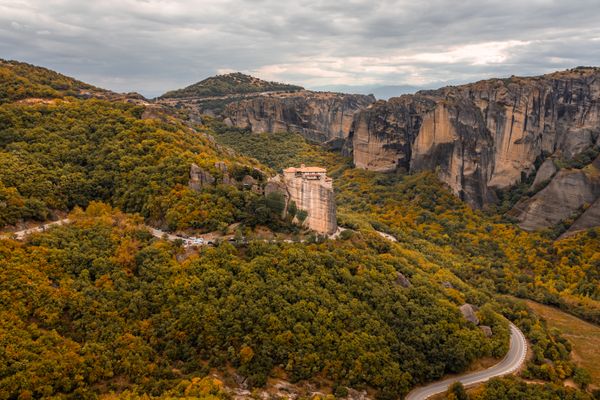
- The famous clifftop monasteries are built atop massive natural rock pillars in Thessaly.
- Six of the original twenty-four monasteries remain extant and open to visitors.
- The site was designated a UNESCO World Heritage Site for its unique architecture and significance.
For Israeli travellers exploring northern Greece, visiting Meteora offers a remarkable cultural and scenic excursion reachable from major cities. Visitors should check the operational hours of individual monasteries in advance, dress modestly (skirts for women and long trousers for men), and wear comfortable walking shoes to handle the stone-carved staircases.
Introduction to Meteora
Meteora is a dramatic rock formation located in the regional unit of Trikala in Thessaly, northwestern Greece, near the town of Kalabaka. It hosts one of the most prominent complexes of Eastern Orthodox monasteries, built high atop giant natural stone pillars.
Geology and Landscape
Unlike typical volcanic formations, Meteora's towering columns consist of a mixture of sandstone and conglomerate shaped over millions of years by weathering from water, wind, and temperature extremes. The unique uniformity and abrupt vertical weathering make the landscape visually striking, earning the complex recognition as a UNESCO World Heritage Site.
History of the Monastic Community
Ascetic hermit monks first inhabited the caves and crevices of the rock towers as early as the 9th century in search of solitude. During the 14th century, monks began constructing monasteries on the summits to escape political turmoil and raids. Access was historically achieved using removable ladders or large hoisting nets, while modern visitors reach the sites via stone-carved steps added during the 20th century.
Extant Monasteries
Out of the twenty-four historical monasteries established at the site, six remain extant and operational, housing small communities of monks and nuns. Notable active sites include the Great Meteoron—the oldest and largest monastery—along with Varlaam, Holy Trinity, and Saint Stephen, offering visitors a glimpse into centuries of monastic tradition.