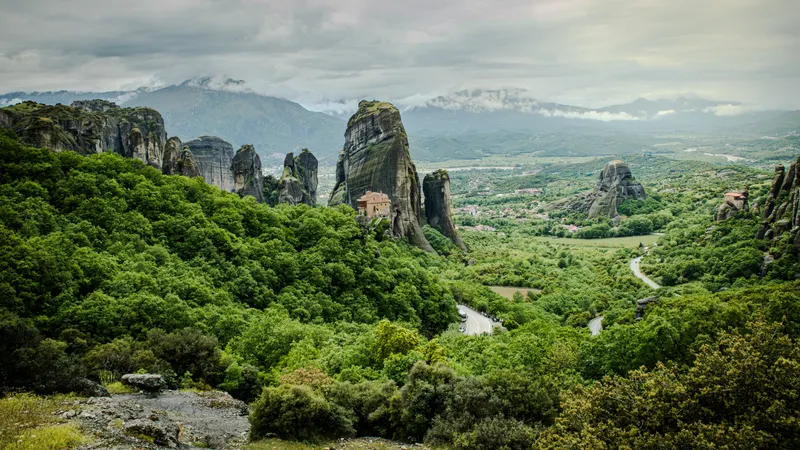
Meteora weather by month: when to visit and what to wear
A temperature table for every month, what happens at the monasteries in winter, and the most comfortable time to go.
- Hot summers (around 32°C in July–August), cold winters (around 12°C by day and 4°C at night).
- The most comfortable time: May–June and September–October.
- From November to March the monasteries keep winter hours, with more closing days.
If you plan Meteora in winter, check which monasteries are open on your day and bring a coat. In summer, set off early. In every season you need modest dress to enter the monasteries.
Meteora weather by month
Meteora lies inland, next to the town of Kalambaka in Thessaly, far from the sea. Its climate is continental: hot, dry summers and colder, wetter winters than Athens or the islands.
| Month | Average high | Average low |
|---|---|---|
| January | 12°C | 4°C |
| February | 12°C | 4°C |
| March | 15°C | 6°C |
| April | 19°C | 9°C |
| May | 25°C | 14°C |
| June | 29°C | about 20°C |
| July | 32°C | about 20°C |
| August | 32°C | about 20°C |
| September | 27°C | about 20°C |
| October | 22°C | 14°C |
| November | 17°C | 9°C |
| December | 12°C | 4°C |
Source: Holiday Weather long-term averages for Meteora. These are averages; individual days can be much warmer or colder, so check a current forecast before you travel.
When is the best time to visit Meteora?
- April–June and September–October: the most comfortable time, pleasant for walking between the monasteries, and green in spring.
- July–August: hot (around 32°C by day) and busy. Arrive early in the morning, before the heat and the coaches.
- November–March: cold, wetter and sometimes foggy, with occasional snow on the surrounding mountains. The views are dramatic, but some monasteries close on more days.
Meteora in November and winter
From 1 November to 31 March the monasteries switch to winter hours, with more closing days. For example, the Great Meteoron closes on Tuesdays, Wednesdays and Thursdays in winter, and Varlaam on Thursdays and Fridays. Entry is €5 per person per monastery, in cash.
Before a winter visit:
- Check which monasteries are open on your day.
- Bring a coat and shoes with good grip; the stone steps get slippery in the rain.
- Days are short, and some monasteries close as early as 14:00–16:00.
Meteora in April and May
April is pleasant (around 19°C by day), but nights are still cool (around 9°C). From 1 April the monasteries switch to summer hours. Passover brings many Israeli visitors, so book accommodation in Kalambaka early.
Meteora in August and September
August is the hottest month. The trails between the rocks are exposed to the sun, so carry water and a hat. September is a little more comfortable (around 27°C by day) and less crowded.
What to wear in Meteora
In every season you need covered shoulders to enter the monasteries; men in long trousers and women in a skirt below the knee. Some monasteries lend skirts at the entrance. In winter add a warm coat and layers.
More on the monasteries, getting there and where to stay: our Meteora guide and the Meteora destination page. For weather across Greece by month: Greece weather.
FAQ
What is the weather like in Meteora in November? In November the average is about 17°C by day and 9°C at night, with more rainy days. The monasteries switch to winter hours from 1 November.
Does it snow in Meteora? Snow sometimes falls in the area and on the surrounding mountains in winter, mainly December–February. It does not happen every year, so check the forecast before you go.
What is the best month to visit Meteora? May–June and September–October, when temperatures are comfortable for walking and it is less crowded than in July–August.
How much does it cost to enter the Meteora monasteries? €5 per person per monastery, in cash at the entrance (as of 2026).