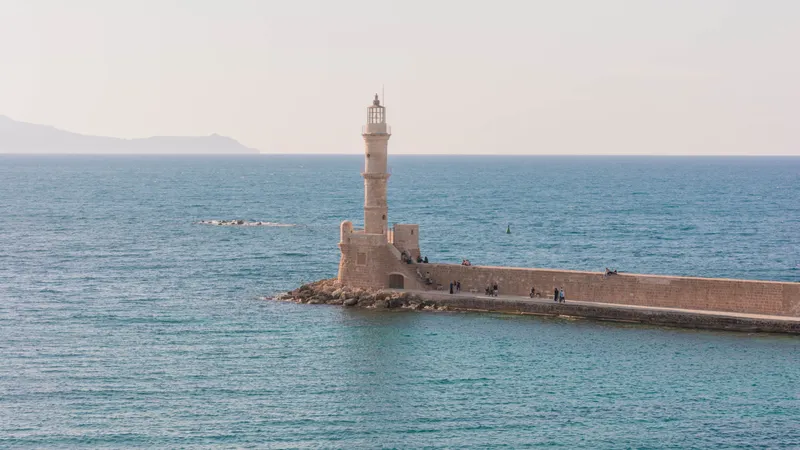
Chania old town: the Venetian harbour, the quarters and the Jewish quarter
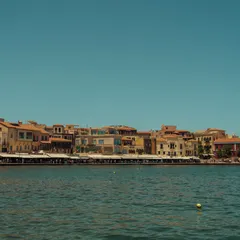
Chania's old town is one of the prettiest in Greece: a Venetian harbour, narrow lanes and layers of Venetian, Ottoman and Jewish history. Here is what to see.
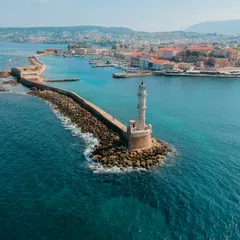
- The old town hugs the old harbour, and the lighthouse at its entrance was built in 1864.
- The main quarters are Kasteli on the hill, Topanas to the west and Splantzia to the east.
- The Jewish quarter (Evraiki) lies within Topanas and is home to the Etz Hayyim synagogue.
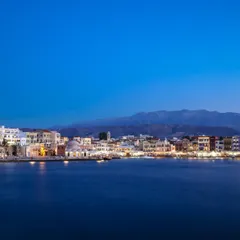
Allow at least half a day on foot in the old town and come back to the harbour in the evening. For Shabbat observers, Etz Hayyim and Chabad are within walking distance.
What is Chania old town?
Chania's old town, in north-west Crete, sits beside the old harbour, and the rest of the city grew around it. Its heart is Kasteli, a small hill by the sea inhabited since Neolithic times. Venetian Canea was founded in 1252. The Ottomans took it from the Venetians during the Cretan War (1645-1669) after a two-month siege.
The Venetian harbour and lighthouse
The Venetian harbour is the most photographed spot in Chania. The lighthouse at its entrance was built in 1864. At Fort Firkas in the old harbour, the Greek flag was first raised after Crete's union with Greece in 1913. The Nautical Museum of Crete is in the old town too.
The Kucuk Hasan mosque
On the harbour stands the Kucuk Hasan Pasha mosque, an Ottoman domed mosque now used as an exhibition hall and one of the defining buildings of Chania's waterfront.
The quarters of the old town
| Quarter | Where | What is special |
|---|---|---|
| Kasteli | The central hill by the sea | The oldest core of the city |
| Topanas | West of Eleftherios Venizelos (Syntrivani) Square | Narrow lanes, restored hotels, restaurants and bars, the nightlife hub |
| Splantzia | East of Kasteli | A quarter left largely untouched |
| Evraiki (Jewish quarter) | North-west, behind the harbour, within Topanas | Etz Hayyim synagogue |
Topanas takes its name from a Venetian ammunition store. Under the Ottomans it was the Christian quarter, while Muslims lived mainly in Kasteli and Splantzia.
The Jewish quarter and Etz Hayyim
Chania's Jewish community was wiped out during the German occupation. Most Jews were deported in 1944, and a British torpedo sank the Tanais, which carried most of the Jewish prisoners. The Etz Hayyim synagogue has been restored and is active today. See Etz Hayyim synagogue in Chania, and for Shabbat see Shabbat with Chabad in Chania.
The market and the walls
The municipal market (Agora) is a covered market from 1913 at the edge of the old town, popular with visitors and locals alike. The Venetian walls were begun in 1538 and strengthened over time; mainly the eastern and western sections survive.
A short route
- Start at the municipal market.
- Walk down to the Venetian harbour and the Kucuk Hasan mosque.
- Follow the harbour to the lighthouse or Fort Firkas and the Nautical Museum.
- Wander the lanes of Topanas and the Jewish quarter.
- Finish in quiet Splantzia.
After the old town, head to the beaches near Chania. Flying direct? See flights from Israel to Chania.
FAQ
What are the must-sees in Chania old town? The Venetian harbour and lighthouse, the Kucuk Hasan mosque, the lanes of Topanas, the Jewish quarter and Etz Hayyim, and the municipal market.
Where is the Jewish quarter in Chania? In the north-west of the old town, behind the harbour, within Topanas.
When was the Chania lighthouse built? In 1864.
Where is the nightlife in the old town? In Topanas, with restaurants and bars in the narrow lanes.